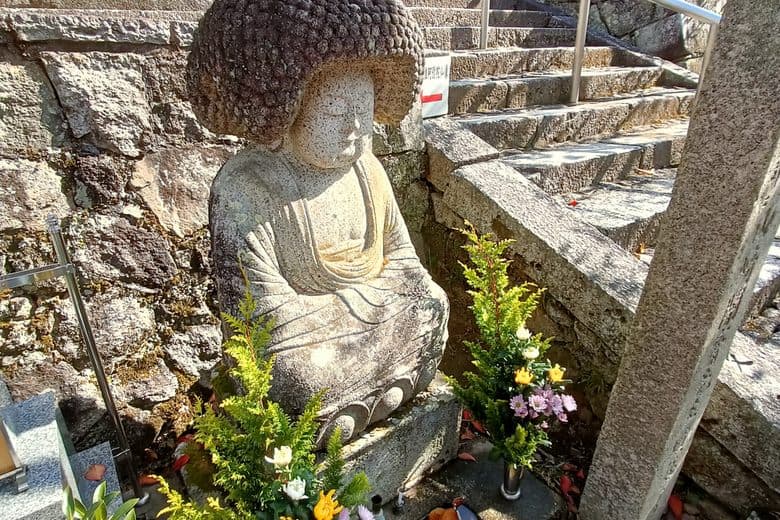
The Gokōshiyui Amidabutsu, often called the 'Afro Buddha,' is a distinctive statue located within the grounds of Kurodani Temple in Kyoto. This statue is significant for its unique depiction of Amida Buddha with an exceptionally voluminous hairstyle, which visually represents the unfathomably long period of meditation (a 'kalpa') he undertook to achieve enlightenment and fulfill his 48 vows to save all sentient beings. It's a powerful visual metaphor for profound devotion and perseverance in Buddhist practice, making it a compelling piece of religious art.
Visitors consistently praise the statue's unusual appearance, finding it both intriguing and memorable. Many appreciate the opportunity to see such a unique representation of Buddha, which stands out from more conventional depictions. The statue's location within the serene Kurodani Temple also contributes to a peaceful and reflective experience, with reviewers often noting the overall tranquility of the temple grounds.
To make the most of your visit, allocate about 30-60 minutes to see the statue and explore the immediate vicinity of Kurodani Temple. The statue is located to the left of the main stairs leading up to the temple, so keep an eye out for it as you ascend. It's best visited during daylight hours to fully appreciate its details. There are no specific items to bring, but comfortable walking shoes are always recommended for temple visits in Kyoto. While the statue itself is the main draw, the temple grounds offer beautiful gardens and other structures worth a brief look.
Kurodani Temple is accessible via public transport. From Kyoto Station, you can take a bus (e.g., city bus routes 201, 203, 204) to the 'Kurodani-machi' or 'Shinnyodo-mae' bus stops, from which the temple is a moderate uphill walk. Alternatively, it's about a 20-25 minute walk from the Keage Station on the Tozai Subway Line. Driving is generally not recommended in central Kyoto due to limited parking and heavy traffic, but if you do drive, look for paid parking lots in the vicinity.
A common oversight is missing the statue entirely, as it's not always prominently signposted and can be overlooked amidst the larger temple complex. To avoid this, specifically look for it to the left of the main stairs as you approach the temple's upper sections. While the temple itself can get busy, the area around the statue tends to be less crowded, allowing for a more intimate viewing experience.