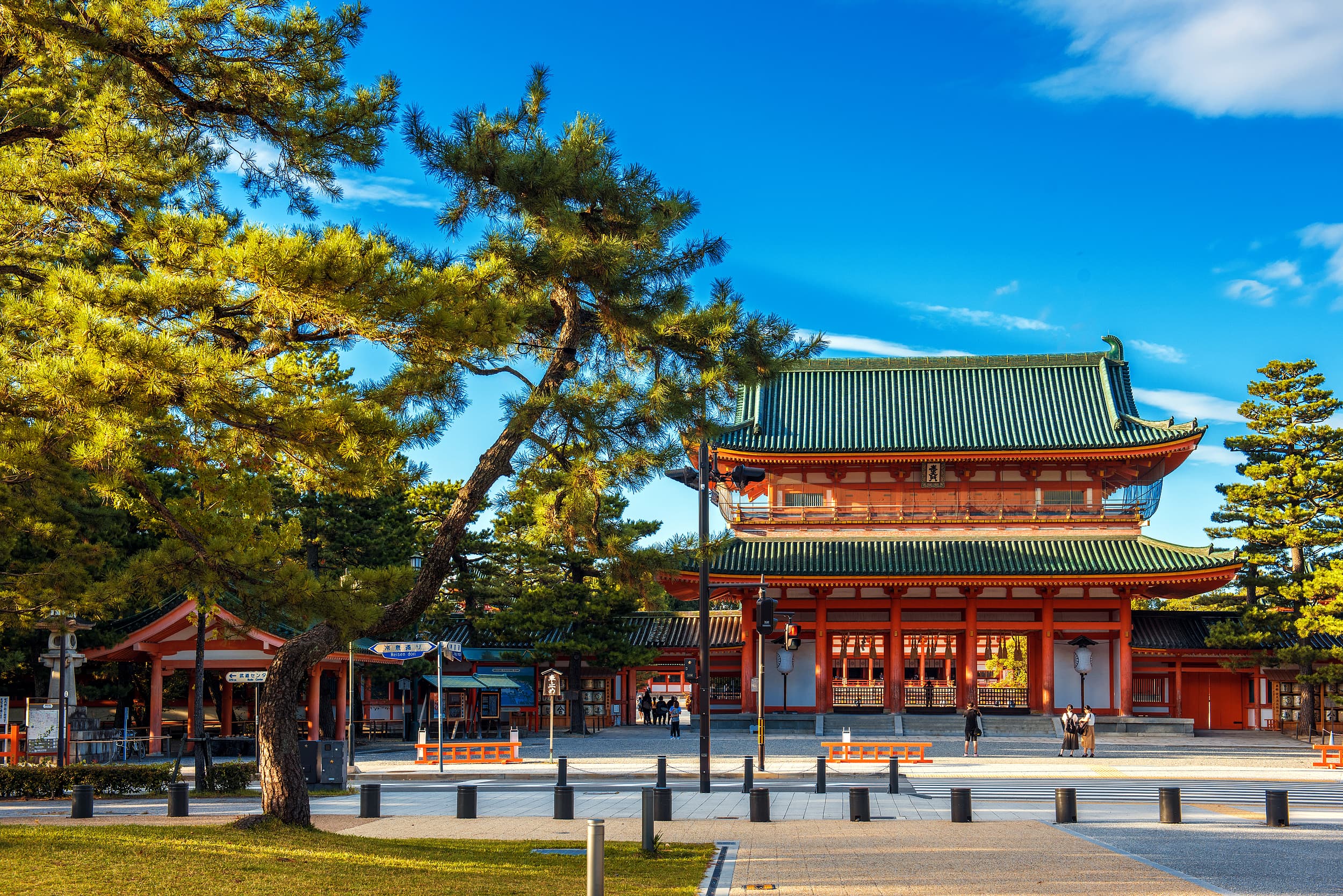
Heian-jingū Shrine is a relatively modern Shinto shrine, built in 1895 to commemorate the 1100th anniversary of Kyoto's founding as the imperial capital. It is dedicated to Emperor Kanmu and Emperor Komei, the first and last emperors to reign in Kyoto. The shrine's architecture is a partial replica of the Imperial Palace from the Heian Period, notable for its vibrant vermilion pillars and green tiled roofs, and its massive torii gate stands as an iconic landmark visible from a distance.
Visitors consistently praise the shrine's grand scale and the striking beauty of its main buildings, particularly the Otenmon Gate and Daigokuden Hall. Many reviewers highlight the peaceful atmosphere and the less crowded nature of the shrine compared to other popular Kyoto attractions, especially if visited early in the morning. However, the overwhelming consensus is that the true gem of Heian-jingū is its Shinen Garden. Reviewers describe it as "spectacular," "exquisite," and "one of the best gardens" in Kyoto, with its ponds, bridges, stepping stones, and diverse flora. The garden is particularly celebrated during specific seasons: for its weeping cherry blossoms in spring, irises and water lilies in early summer, and vibrant autumn colors. Several visitors note that the garden offers numerous picturesque locations and a tranquil environment, making it ideal for photography and relaxation.
To make the most of your visit, allocate at least 1-2 hours, with an additional hour if you plan to thoroughly explore the Shinen Garden. Many suggest visiting early in the morning to avoid crowds and enjoy the tranquility, especially for photography. While the main shrine grounds are free, there is an admission fee of 600 yen to enter the Shinen Garden, which most visitors agree is well worth the cost. Consider bringing comfortable walking shoes as the grounds are extensive. If you are visiting during specific blooming seasons (e.g., cherry blossoms in spring, irises in June), plan your trip accordingly to witness the garden at its peak beauty. Some reviewers mention nearby craft markets or food vendors, especially on weekends or during events, which can add to the experience.
Heian-jingū Shrine is conveniently located in the Okazaki area. It is about a 10-minute walk from Higashiyama Station on the Kyoto Municipal Subway. The massive torii gate is easily visible from a distance, guiding your way. Many visitors also reach the shrine via the hop-on-hop-off Sky Hop Bus, which has a stop directly at the shrine. For those driving, parking is available, though public transport is generally recommended in Kyoto. The shrine is also close to several museums and the Kyoto City Zoo, making it easy to combine with other cultural activities in the area.
A common complaint among some visitors is that the main shrine area, while grand, can feel somewhat empty or less historically significant compared to older Kyoto temples, especially if parts are under renovation. To mitigate this, focus your visit on the Shinen Garden, which consistently receives high praise regardless of the main shrine's condition. Check for any ongoing renovations before your visit, though even with construction, the gardens remain a highlight. Some also note that if you've visited many other shrines in Kyoto, the main hall might seem less unique; however, the garden's distinct design and seasonal beauty often set it apart.