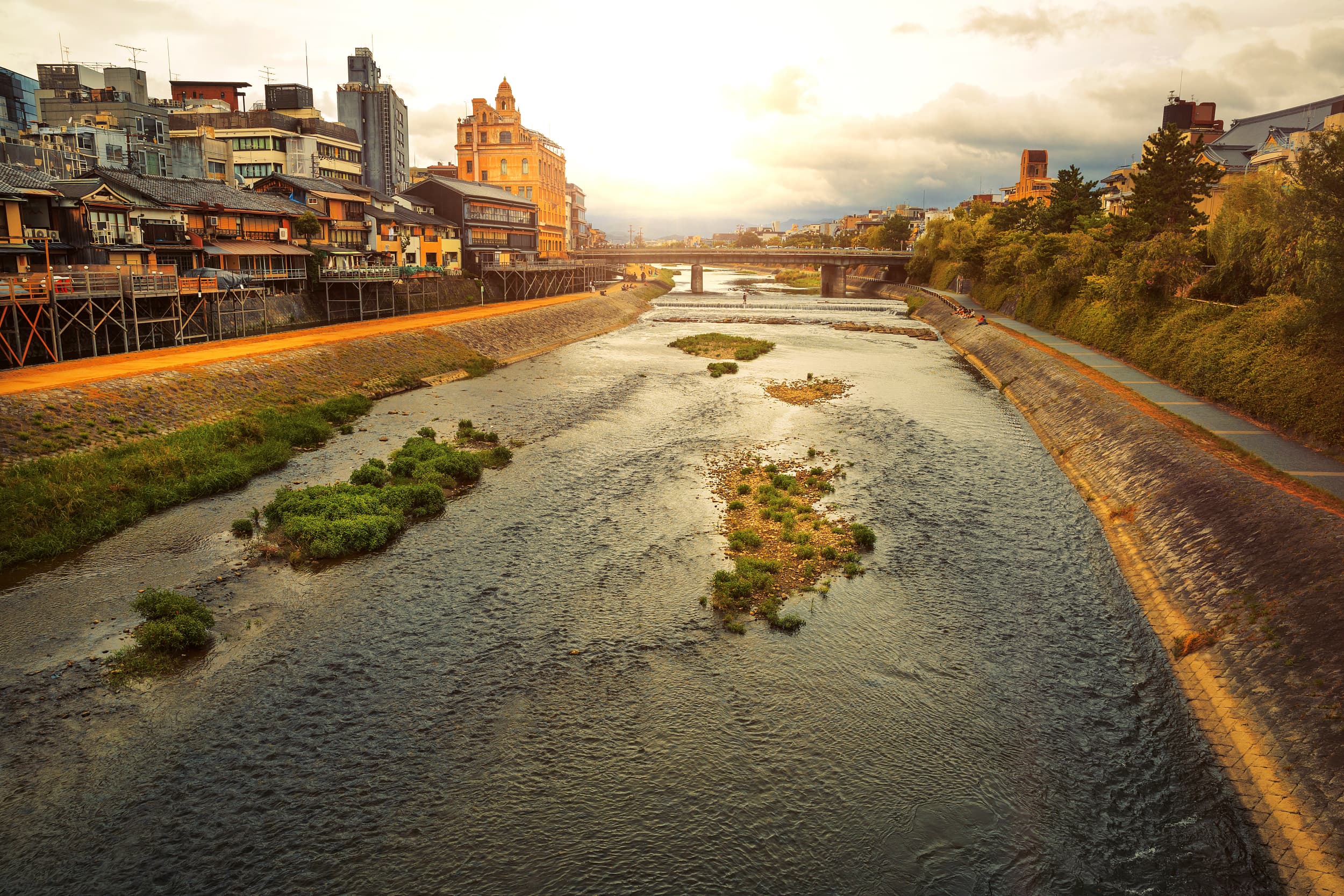
The Kamo River, often referred to as Kyoto's 'mother river,' is a central artery flowing through the city, offering a unique blend of natural beauty and urban life. It's not just a river; it's a vibrant public space where Kyotoites and visitors alike come to unwind, exercise, and connect with nature. Its significance lies in its role as a historical backdrop to Kyoto's development and its current function as a beloved recreational area.
Visitors consistently highlight the river's serene atmosphere and its suitability for leisurely activities. Many reviewers describe it as an ideal place for a relaxing walk, a bike ride, or simply sitting by the banks to observe local life and wildlife. The clear water, often shallow enough to see the riverbed, is a recurring point of praise, as is the abundance of waterfowl like egrets, ducks, and even eagles. The river's beauty is particularly emphasized during the cherry blossom season, when the trees lining its banks burst into bloom, creating a picturesque setting that many consider a must-see. In summer, the traditional 'Kawatoko' dining terraces, built by riverside restaurants, offer a unique culinary experience, allowing diners to enjoy meals with a cool breeze from the river.
To make the most of your visit, consider bringing comfortable walking shoes or renting a bicycle to explore the extensive paths along both banks. Many visitors suggest spending anywhere from 1 to 3 hours, depending on whether you're just strolling or planning a longer activity like cycling. The best time to visit is during the cherry blossom season (typically late March to early April) for its unparalleled beauty, or in the evening when the river takes on a different, often romantic, ambiance. For a more tranquil experience, consider visiting in the early morning before the crowds gather. Reviewers also suggest finding a spot to sit and simply watch the world go by, perhaps with a snack or drink, to fully appreciate the local pace of life.
The Kamo River is easily accessible from various points in Kyoto. Many hotels are located within walking distance, particularly in the Kawaramachi and Gion areas. Public transportation is also convenient, with numerous bus stops and subway stations (such as Kiyomizu-Gojo, Shijo, and Sanjo) located close to the river. From Kyoto Station, you can take a short subway ride or a bus to reach different sections of the river. The river itself is a long stretch, so you can choose to start your exploration from any bridge or access point that suits your itinerary.
While generally a positive experience, some visitors note that certain sections can become crowded, especially during peak seasons or around popular bridges. To mitigate this, consider exploring less central stretches of the river or visiting during off-peak hours. The river is open 24/7, offering opportunities for quiet contemplation even late at night.