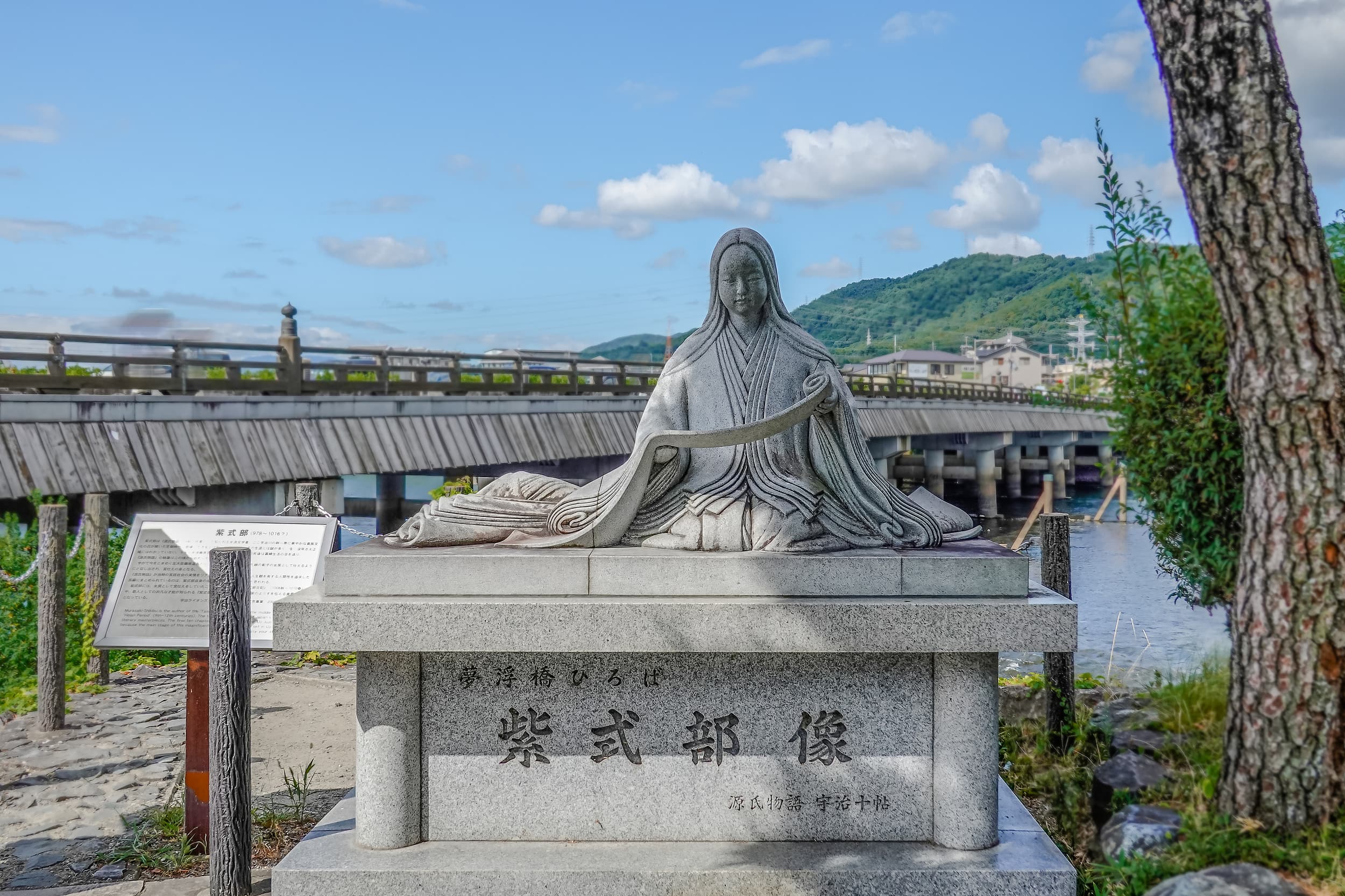
The Statue of Murasaki Shikibu stands as a tribute to one of Japan's most influential literary figures, Murasaki Shikibu, author of 'The Tale of Genji.' This bronze-covered stone statue, depicting her with a scroll gazing towards the Uji River, is strategically placed to highlight Uji's deep connection to her masterpiece, particularly the 'Uji Jujo' (Ten Chapters of Uji) which are set in this very region. It serves as a cultural landmark, inviting visitors to reflect on the historical and literary significance of the area.
Visitors consistently appreciate the statue's prominent location near the Uji Bridge, making it an easy and accessible stop during a stroll along the river. Reviewers note its significance as a symbol of Japanese literary heritage, particularly for those familiar with 'The Tale of Genji.' The statue is often seen as a pleasant, quick photo opportunity and a point of interest that enriches the overall experience of Uji, especially when combined with views of the Uji River and nearby attractions like Byodoin Temple.
For a visit, plan to spend about 10-15 minutes at the statue itself. It is best viewed during daylight hours, though it is accessible 24/7. There are no specific items to bring, but a camera is recommended for photos. Combining a visit here with a walk across the Uji Bridge and exploration of the riverside area is highly recommended. There is no entry fee, making it a budget-friendly cultural stop.
The statue is located at Yume Floating Bridge Square on the west side of the Uji Bridge. Uji is well-connected by train. From Kyoto Station, take the JR Nara Line to Uji Station. The statue is a short walk (approximately 10-15 minutes) from Uji Station, heading towards the Uji Bridge. Alternatively, the Keihan Uji Line also serves Uji, with Uji Station being even closer to the bridge area. Its central location makes it easily reachable on foot from most central Uji attractions.
Common complaints are minimal, primarily stemming from visitors expecting a larger or more interactive attraction. It is important to approach the statue as a commemorative monument rather than a grand exhibition. Its value lies in its symbolic representation and its integration into the scenic and historically rich Uji landscape.