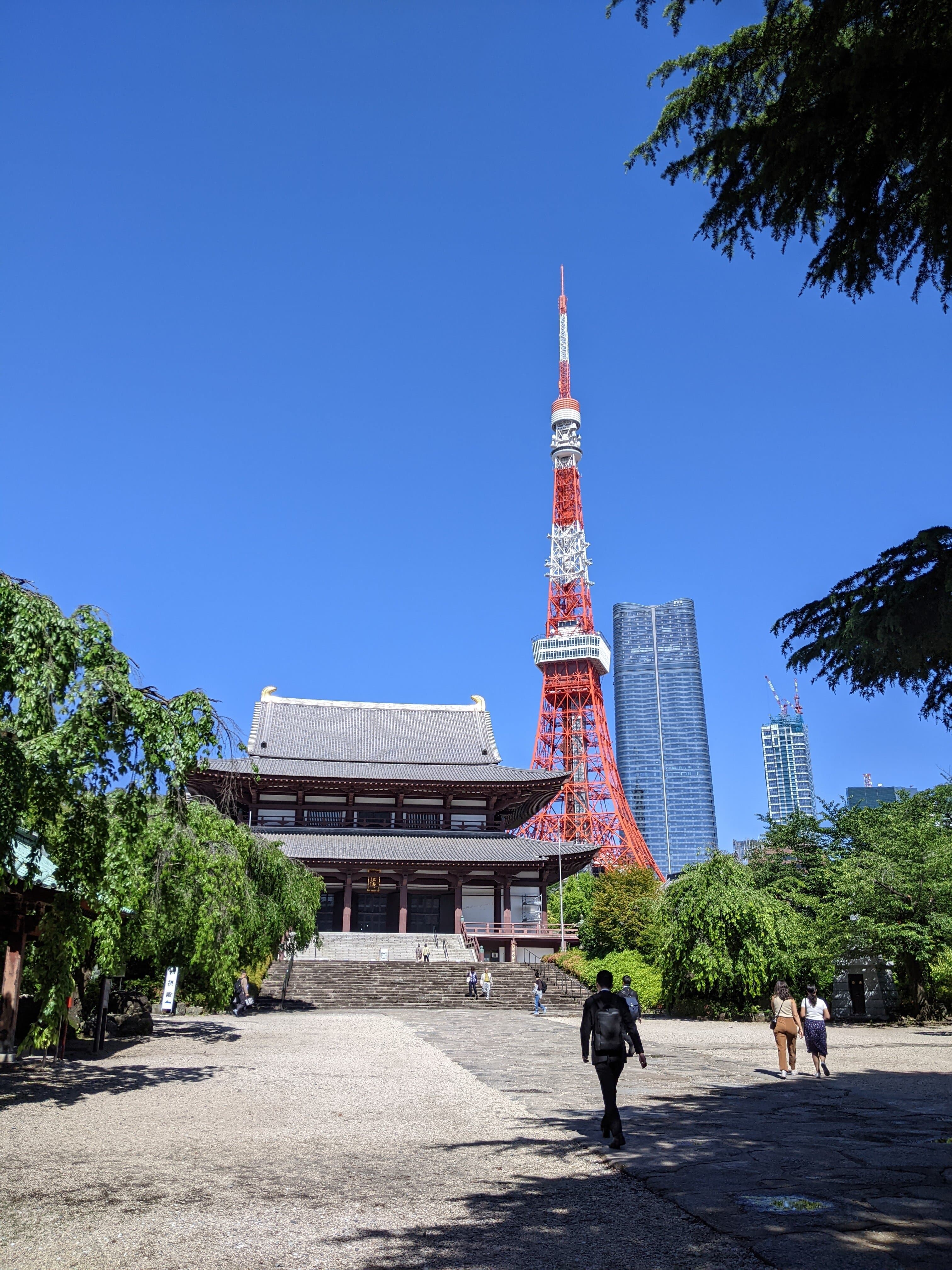
Zojo-ji Temple is a significant Buddhist temple in Tokyo's Minato ward, deeply intertwined with Japanese history as the family temple of the powerful Tokugawa clan. Its main gate, dating from 1622, is Tokyo's oldest wooden structure, offering a glimpse into the Edo period. While many buildings were rebuilt after WWII, the temple continues to serve as a central seminary for Pure Land Sect Buddhism, providing a profound sense of continuity and tradition amidst the modern cityscape.
Visitors consistently praise the temple for its peaceful and tranquil atmosphere, often describing it as a quiet oasis away from Tokyo's bustling streets. The striking visual contrast between the traditional temple architecture and the towering Tokyo Tower in the background is a major highlight, making it a highly recommended spot for photography. Many reviewers mention the moving Jizo statues, dedicated to unborn children, with their distinctive red hats and bibs, which add a unique and poignant element to the grounds. The temple is particularly beautiful during cherry blossom season, when the surrounding trees enhance its serene charm.
To make the most of your visit, plan to spend 1-2 hours exploring the grounds. Early mornings are often recommended by visitors for a more serene experience with fewer crowds. While the main temple grounds are free to enter, there is a fee for the Treasures Exhibition Room and the Tokugawa Shogun Mausoleum. Some visitors suggest skipping the museum if time is limited, focusing instead on the outdoor areas and the main hall. Respectful behavior is encouraged, especially during ceremonies; visitors note that photography inside the main hall is generally permitted but advise against taking photos of people praying.
Zojo-ji Temple is conveniently located and easily accessible. It's just a 5-minute walk from Tokyo Tower and a 10-minute walk from Hamamatsucho Station (JR Line). Other nearby subway stations include Onarimon and Shiba-Koen (Toei Mita Line) and Daimon (Toei Oedo Line), all within a short walking distance. Reviewers frequently mention walking from these stations, noting the pleasant stroll through Shiba Park. If you're coming from Mori Tower, be aware that it can be a hot and tiring walk, so public transport is recommended.
A common complaint among some visitors is that parts of the temple, particularly the Sangetsumon gate, have been under restoration, which can detract from the overall aesthetic. Additionally, some find the temple less elaborate than other famous temples in Japan. To mitigate this, check the official website for any ongoing restoration work before your visit. Despite these minor points, the temple's unique setting and peaceful ambiance generally outweigh any perceived shortcomings, especially for those seeking a blend of history, culture, and iconic Tokyo views.