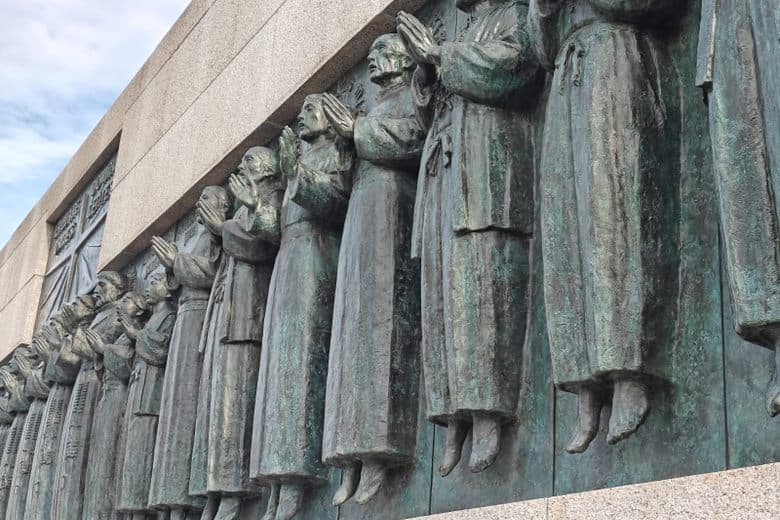
The Twenty-Six Martyrs Monument in Nagasaki stands as a solemn tribute to 20 Japanese converts and six foreign missionaries who were crucified here in 1597. This event marked a turning point in Japan's relationship with Christianity, leading to centuries of isolation and persecution. The site, canonized by the Pope in 1862, serves not only as a memorial to these individuals but also to all those who suffered for their faith during that tumultuous period.
Visitors consistently describe the monument and its accompanying museum as deeply moving and historically significant. Many praise the detailed exhibits in the museum, which effectively convey the story of the martyrs and the broader context of Christian persecution in Japan. Reviewers often highlight the bronze plate by Yasutake Funakoshi, depicting the saints, as a powerful artistic representation. The quiet and reflective atmosphere of the site is frequently mentioned, allowing for a profound personal experience. Some visitors recommend taking the time to read all the information provided, as it enriches the understanding of the site's importance.
To make the most of your visit, allocate at least 1-2 hours, especially if you plan to explore the museum thoroughly. The best time to visit is during the cooler parts of the day, as the outdoor monument can be exposed to the elements. There is no entry fee for the monument itself, but the museum may have separate operating hours and a small fee, so it's advisable to check their official website beforehand. Bringing a small amount of cash for the museum or any potential donations is a good idea. Consider combining this visit with other historical sites in Nagasaki, as it provides crucial context to the city's unique past.
The Twenty-Six Martyrs Monument is conveniently located near Nagasaki Station. Many visitors report that it's an easy walk, approximately 5-10 minutes, from the station. Alternatively, local trams and buses also serve the area, with stops very close to the monument. If driving, parking options might be limited in the immediate vicinity, so public transport or walking is generally recommended.
While most visitors have a positive experience, a common complaint is the lack of English explanations in some parts of the museum or at the monument itself, though this has reportedly improved over time. To mitigate this, consider downloading a translation app or doing some preliminary research on the history before your visit. Some also find the subject matter quite somber; be prepared for a reflective and potentially emotional experience.