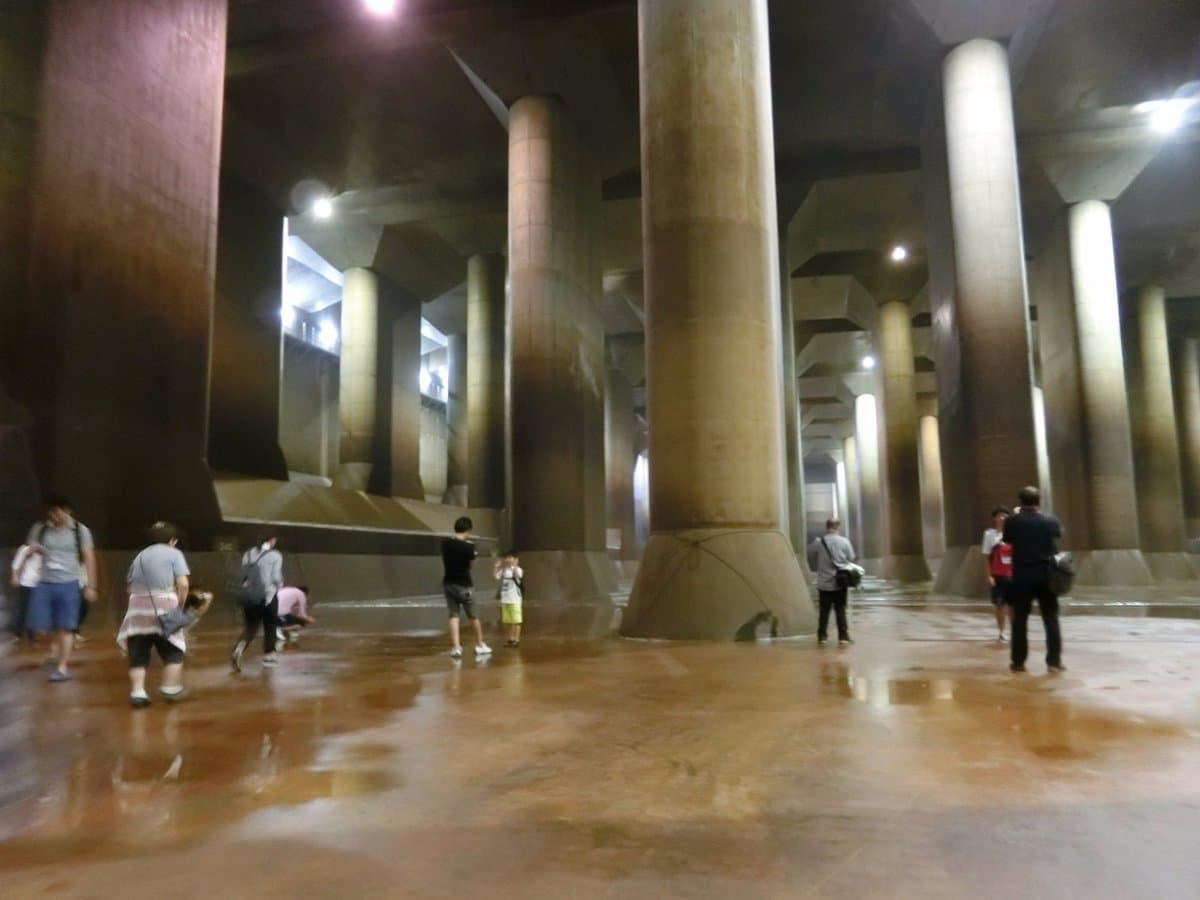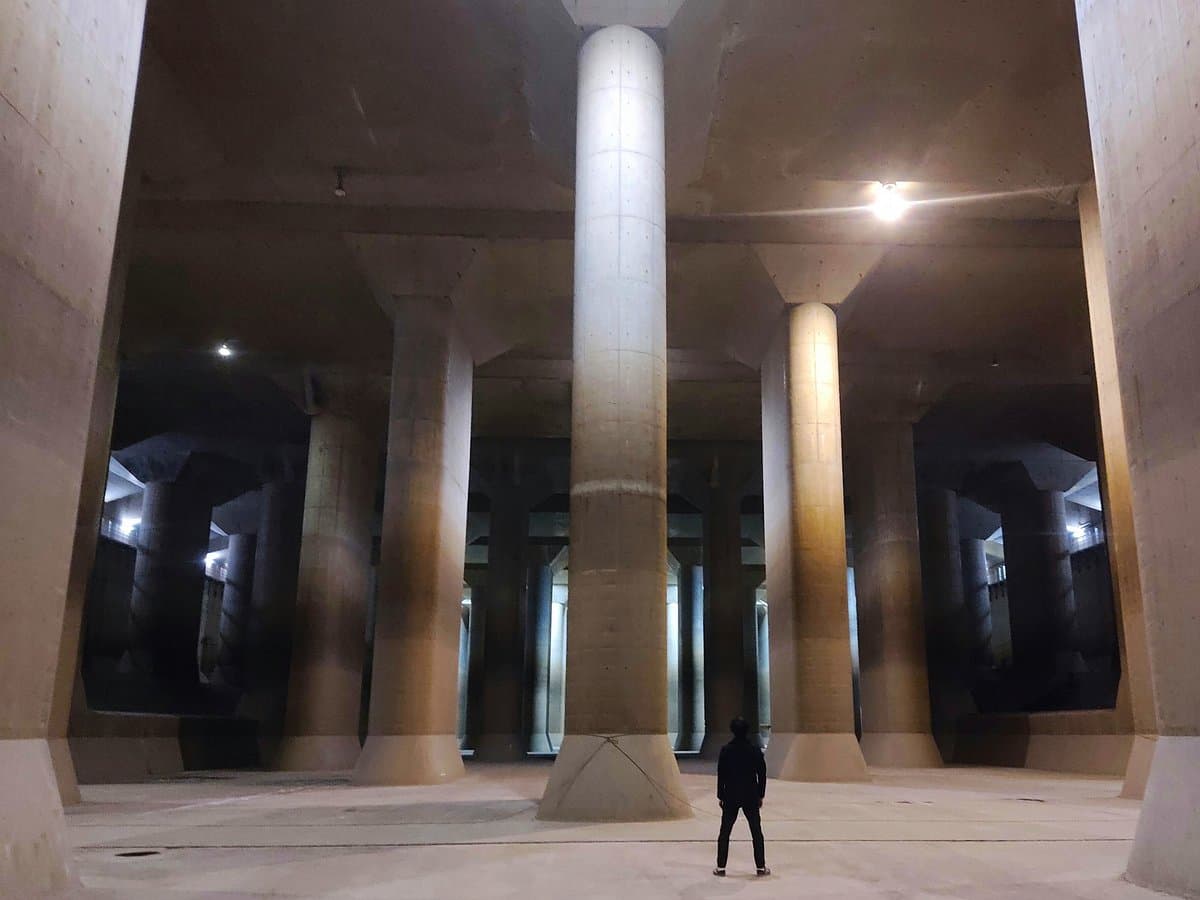
The Metropolitan Outer Area Underground Discharge Channel, affectionately known as the "Underground Temple" or GCANS, is a colossal underground flood control facility designed to protect the greater Tokyo area from typhoon-induced flooding. It's a remarkable testament to human engineering, featuring massive concrete pillars and vast subterranean spaces that are both functional and visually striking. The facility plays a critical role in disaster prevention for one of the world's largest metropolitan areas.
Visitors consistently praise the sheer scale and engineering ingenuity of the facility. Many describe the experience as "unique" and "impressive," highlighting the awe-inspiring size of the main chamber. Reviewers frequently mention the detailed explanations provided during tours, which cover the facility's purpose and the science behind flood control. The opportunity to walk through parts of this active flood control system is a major draw, with some tours even venturing into darker, water-filled areas with provided boots. While some online descriptions might "overhype" it, the general consensus is that the actual experience lives up to expectations for those interested in infrastructure and unique sights.
To make the most of your visit, advance planning is essential as all tours require reservations via the official website. Several tour courses are available, such as the "Impeller Exploration Course" or the "Casual Underground Temple Course," with prices around 4000 yen for a two-hour experience. Even if you don't speak Japanese, you can still enjoy the tour; an English brochure and a downloadable app with audio explanations are available on-site. Visitors recommend downloading the app via QR code upon arrival. It's advisable to wear comfortable shoes, and some tours may provide boots for walking through wet areas. The facility also has a small museum, the Ryu-Q Kan, which offers videos and exhibits in English, along with a souvenir shop.
The facility is located at 720 Kamikanasaki, Kasukabe, Saitama Prefecture, which is described by reviewers as being "in the middle of nowhere." Public transport options are limited but available. Some visitors mention a "community bus" service from Kusukabe Station. Given its somewhat remote location, planning your journey in advance is crucial. Driving might be an option for some, but public transport details should be verified on the official website or through local transport guides.
The main complaint from visitors is the strict reservation policy and the potential language barrier, although the provision of English materials mitigates the latter. Safety regulations require that non-Japanese speakers either understand Japanese or be accompanied by a Japanese-speaking person for certain tours. To avoid disappointment, book well in advance, especially for popular courses, and ensure you understand the language requirements for your chosen tour.