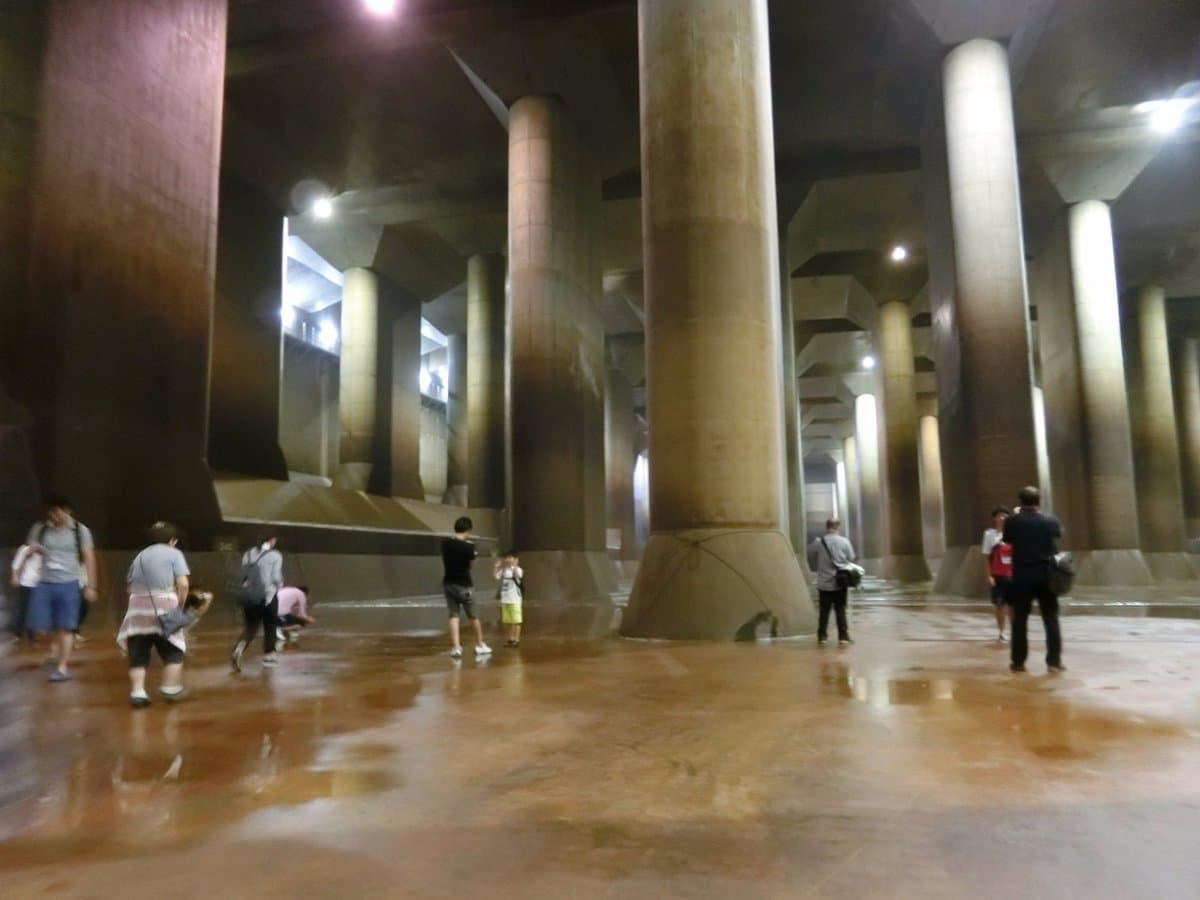
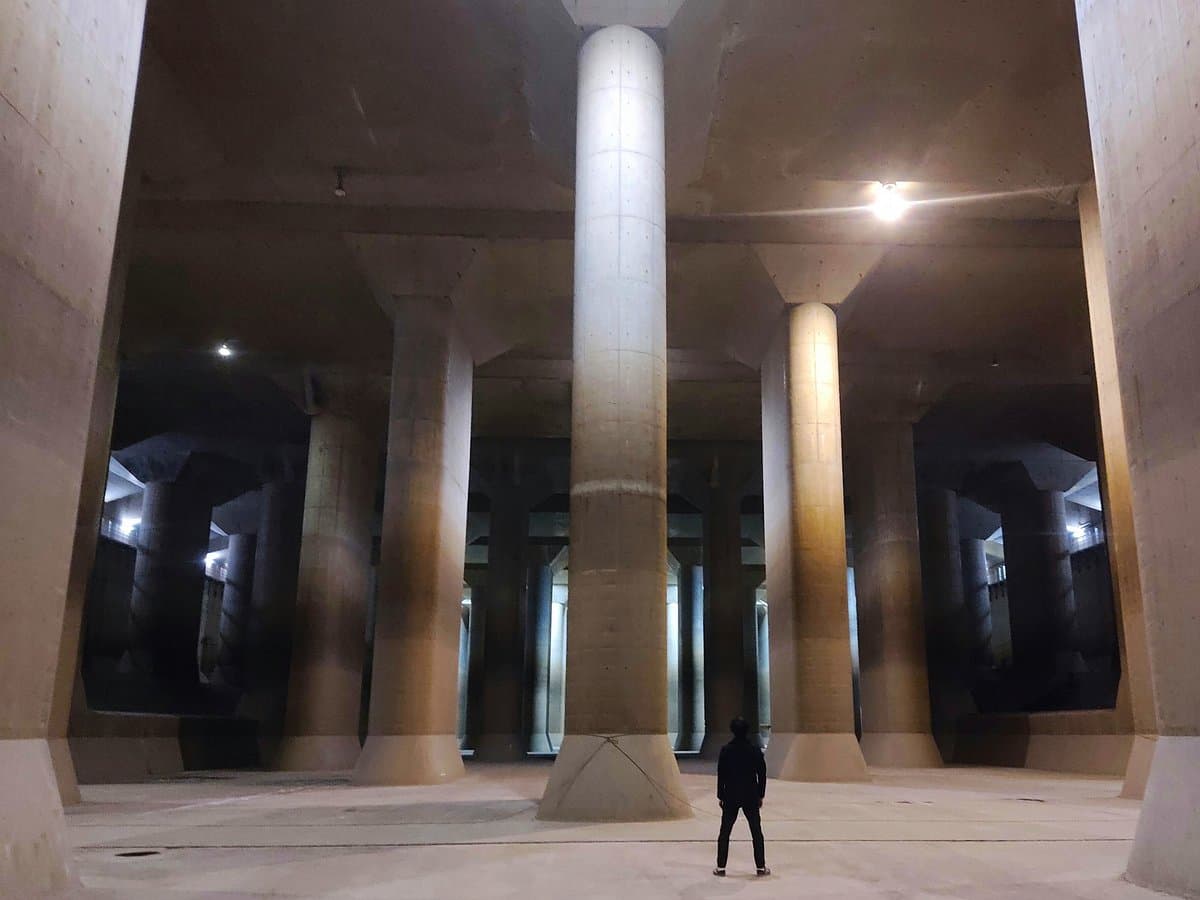
The G-Cans project, officially known as the Metropolitan Area Outer Underground Discharge Channel, is a monumental underground flood control system designed to protect Tokyo and the surrounding areas from severe monsoon flooding. Completed in 2009 after a two-billion-dollar investment, this engineering marvel features over 100 kilometers of tunnels, massive 213-foot-tall silos, and the iconic 83-foot-tall, 580-foot-long main tank, famously dubbed the "Underground Temple." It can pump over 200 tons of water per second and has proven indispensable in mitigating flood risks, making it a critical piece of Japan's infrastructure.
Visitors consistently praise the sheer scale and impressive engineering of the "Underground Temple." Many describe feeling awestruck by the vastness of the space and the intricate design required to manage such immense water volumes. The tour offers a unique perspective on a hidden world beneath the surface, often highlighting its unexpected beauty and the ingenuity behind its construction. Reviewers frequently mention the opportunity to take striking photographs, especially within the main tank area, which has also served as a filming location for various media.
To make the most of your visit, it is highly recommended to reserve your tour in advance, especially if visiting on a weekend. While walk-ins might be accommodated on weekdays if there's space, guaranteed entry comes with a reservation. There are typically two main tour options: the hour-long "Underground Temple" course (1,000 yen) and the more extensive "Shaft course" (3,000 yen), which includes a walk around one of the massive drain shafts. The tours are conducted in Japanese only, so bringing a translator is advised for safety reasons and to fully understand the explanations. Visitors with a fear of heights should be aware of the Shaft course. Allow at least 1.5 to 2 hours for the entire experience, including travel to the reception center and the tour itself. The best time to visit is during the drier seasons to ensure tours are running, as operations can be affected by heavy rainfall.
To reach G-Cans, head to the Ryū-Q Kan museum, which serves as the reception center. From Kasukabe Station, take a bus to the Tsujibashi stop (approximately 15 minutes) and then walk northeast for about 20 minutes. Alternatively, from Minami-Sakurai Station, you can either walk for 30 minutes or take a 10-minute taxi ride. Public transport is generally reliable, but factoring in walking time is crucial. Parking information is not widely available in reviews, suggesting public transport or taxis are the preferred methods.
A common complaint among non-Japanese speaking visitors is the lack of English tours or guides. This can make it challenging to fully grasp the technical details and historical context provided during the tour. To mitigate this, consider bringing a Japanese-speaking friend or a portable translation device. Some visitors also suggest researching the project beforehand to gain a better understanding of its significance, which can enhance the experience even without a direct translation during the tour.