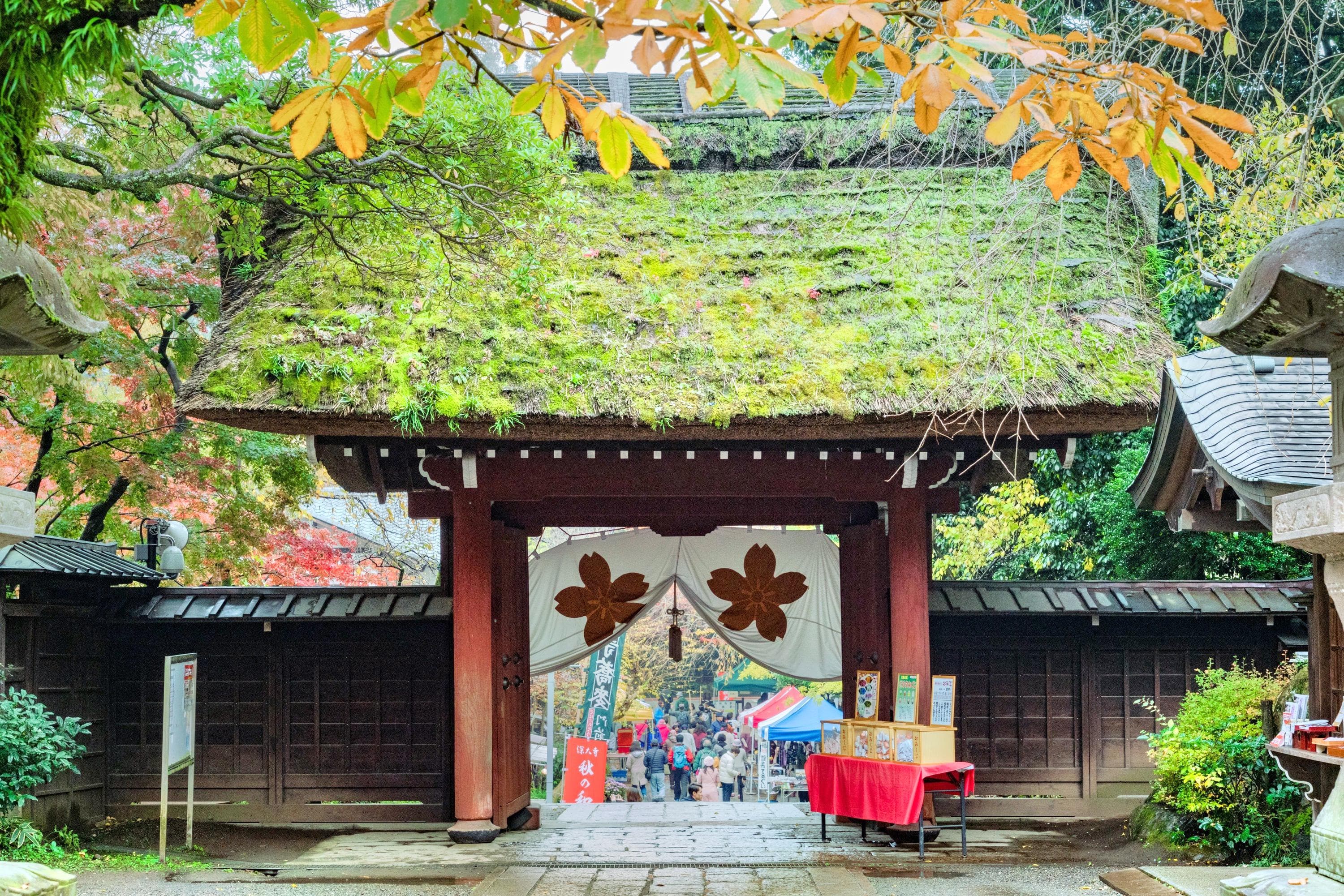
Jindaiji Temple, or Fuyue Mountain Jindaiji, stands as Tokyo's second oldest temple, predating even Sensoji Temple. It is a significant historical and cultural site, housing the oldest national treasure in eastern Japan, the statue of Shaka Nyorai (Hakuhobutsu), which dates back to the late Asuka period. Beyond its historical importance, Jindaiji is celebrated for its tranquil, green environment, offering a stark contrast to the dense urban landscape of central Tokyo.
Visitors consistently highlight the temple's beautiful natural setting, with many noting the abundance of water sources, lush trees, and even large carp in ponds, contributing to a relaxing atmosphere. The area is particularly famous for its soba noodles, with numerous traditional restaurants lining the approach to the temple. Reviewers often recommend trying the soba, dango, and mochi cakes, and some enjoy watching soba makers at work. The Kitaro Teahouse, based on the popular manga series "Ge Ge Ge No Kitaro," is also a popular spot, especially for families and those seeking photogenic opportunities.
To make the most of your visit, allocate 2-3 hours to explore the temple grounds, enjoy a soba meal, and browse the local shops. Many suggest visiting on a weekday afternoon for a quieter experience, as weekends can be more crowded. The area is particularly pleasant in late autumn for viewing autumn leaves, and even on hot summer days, the shaded paths offer a comfortable walk. Consider combining your visit with the nearby Jindai Botanical Garden for a full day out. Reviewers advise against expecting a massive temple complex; instead, appreciate the village-like charm and focus on the culinary and natural aspects.
Access to Jindaiji Temple requires a combination of train and bus, as it is not directly served by a train station. The most common routes involve taking a train (Keio Line or JR Chuo/Sobu Line) to Chofu Station, Kichijoji Station, or Mitaka Station, and then transferring to a local bus. From Chofu Station, a bus ride takes about 10-20 minutes, or it's a 25-30 minute walk. From Kichijoji or Mitaka Stations, the bus ride is approximately 15-30 minutes, depending on traffic. Reviewers note that buses are frequent and accessible. While parking is available, its capacity is limited, so public transportation is generally recommended.
A common complaint among some visitors is the perceived remoteness and the multi-step journey to reach the temple, especially for those unfamiliar with Tokyo's public transport system. To mitigate this, plan your route in advance using online maps or transportation apps, and factor in extra travel time. Some also find the temple itself to be smaller than expected, so manage expectations by focusing on the broader experience of the temple grounds, the soba village, and the surrounding nature rather than just the main temple buildings.