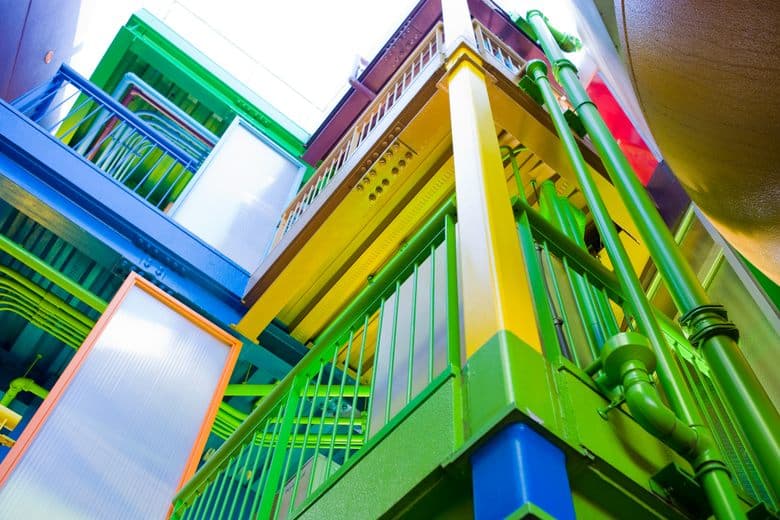
The Reversible Destiny Lofts Mitaka represent a radical departure from conventional residential architecture, conceived by artists Shusaku Arakawa and Madeline Gins. Completed in 2005, this complex of nine residential units is an architectural experiment aiming to stimulate the senses and promote well-being, embodying the concept of 'reversible destiny' — learning how not to die. Its vibrant, almost whimsical design, featuring spheres, cubes, and tubes in a riot of colors, stands out dramatically against the more subdued urban landscape of western Tokyo.
Visitors consistently praise the unique and thought-provoking nature of the architecture, often describing it as a 'must-see' for anyone interested in avant-garde design. Many are captivated by the exterior's playful colors and unusual shapes, finding it a refreshing visual experience. However, some reviewers note that while the exterior is striking, the limited public access can be a drawback. The complex is primarily private residences, meaning visitors can only view it from the sidewalk unless a tour or short-stay rental is arranged.
For those planning a visit, it's crucial to remember that this is a residential area. Respect the privacy of the residents; do not attempt to enter the property without prior permission. While tours can sometimes be arranged, and two apartments are available for short stays, most visitors will experience the lofts from the outside. Allow about 30-60 minutes to appreciate the exterior and take photographs. The best time to visit is during daylight hours to fully appreciate the vibrant colors. Bringing a good camera is recommended to capture the unique visual details.
The Reversible Destiny Lofts Mitaka are located in Mitaka, in western Tokyo. They are easily accessible by public transport. Visitors can take a bus from several nearby train stations, including Mitaka Station, Musashisakai Station, and Chofu Station. Specific bus lines can be identified using local navigation apps. If driving, be aware that parking is limited to a few nearby lots on side streets, so public transport is generally recommended. The complex is situated near the intersection of Tokyo Metropolitan Route 14 (Tohachi Doro) and Tenmondai Dori.
A common complaint among visitors is the lack of interior access for casual tourists. To mitigate this, manage expectations by understanding that the primary experience will be observing the exterior. If interior access is desired, research and book a tour or a short-term stay well in advance, as these opportunities are limited and often require reservations.