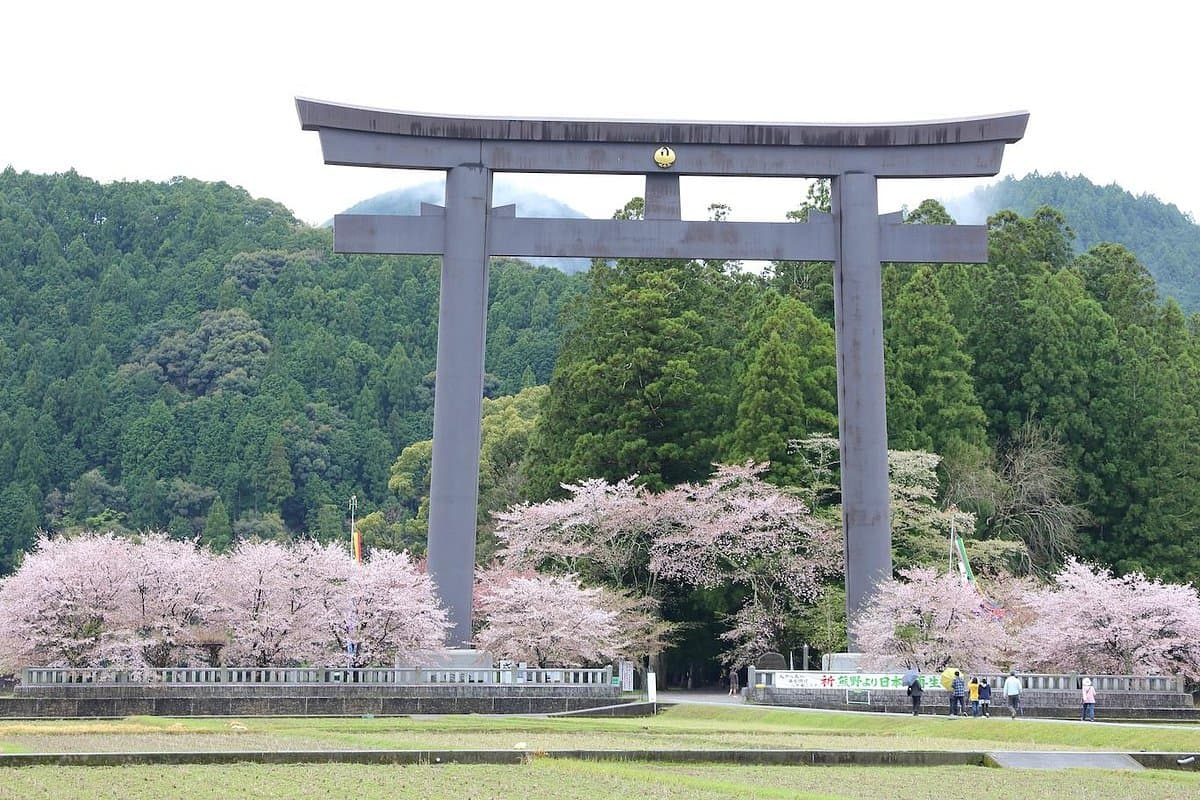
Kumano Hongu Taisha Kyushachi Oyunohara marks the sacred ground where the main buildings of the Kumano Hongu Taisha shrine originally stood for centuries. This site is profoundly significant as one of the three Grand Shrines of Kumano, a UNESCO World Heritage pilgrimage route. After a devastating flood in 1889, most of the shrine was washed away, and the remaining structures were relocated to higher ground. Today, the site is dominated by the Otorii, the largest torii gate in the world, serving as a powerful symbol of the former shrine's grandeur and spiritual importance.
Visitors consistently praise the immense scale and visual impact of the Otorii gate, often describing it as a "wow" moment. Many appreciate the serene atmosphere of the site, noting its peaceful setting amidst rice paddies and gardens. Reviewers frequently highlight the photographic opportunities, especially when the gate is reflected in the rice fields or framed by cherry blossoms in spring. The historical context of the site, understanding that a major shrine once stood here, adds a layer of depth to the visit, making it more than just a large gate. Several visitors mention the sense of peace and relaxation they experience here, suggesting it's a good place for quiet contemplation.
To make the most of your visit, allocate about 1-2 hours. Many suggest visiting in the early morning for a more captivating and dreamy atmosphere, as well as fewer crowds. The site is particularly stunning during cherry blossom season (mid-April), when locals gather for picnics. While the torii is the main attraction, take time to walk around the grounds, where small stone shrines and foundation stones hint at the original layout. Don't forget your camera, as the gate offers excellent photo opportunities. Some reviewers recommend combining this visit with the nearby Kumano Hongu Taisha shrine and the World Heritage Center for a more complete understanding of the area's history.
Oyunohara is conveniently located a short walk from the current Kumano Hongu Taisha shrine. If you are arriving by public transport, the nearest bus stop is Hongu Taisha-mae, which is served by buses from Kii-Tanabe station. From there, it's an easy walk to both the current shrine and Oyunohara. For those driving, sufficient car parking is available, often with security. The site is also visible and accessible from parts of the Kumano Kodo trail, with some viewpoints offering panoramic views of the massive gate from a distance.
A common complaint is that beyond the impressive torii gate, there isn't much else to see, as the original shrine buildings are gone. To mitigate this, it's crucial to understand the historical significance of the site before arriving. Reading up on the flood and the relocation of the shrine enhances the experience, transforming it from just a big gate into a poignant historical landmark. Visiting the nearby Kumano Hongu Taisha shrine and the World Heritage Center can also provide additional context and activities.