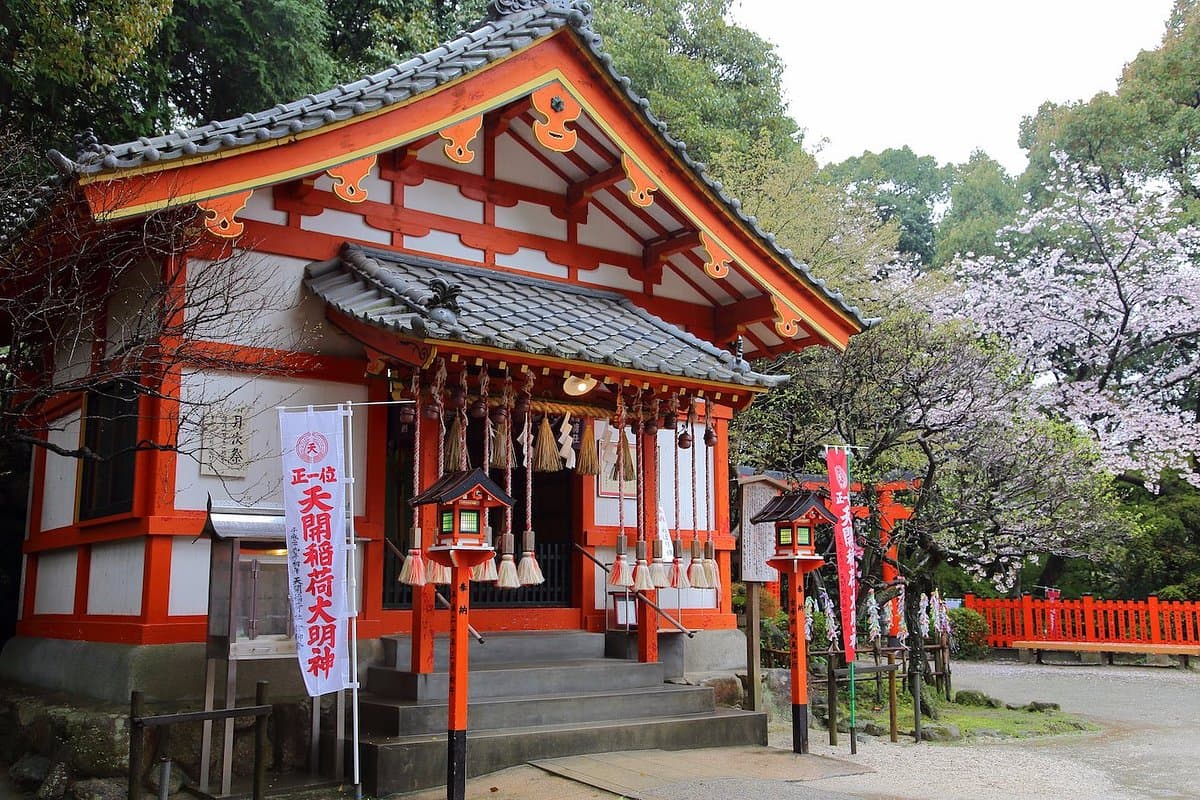
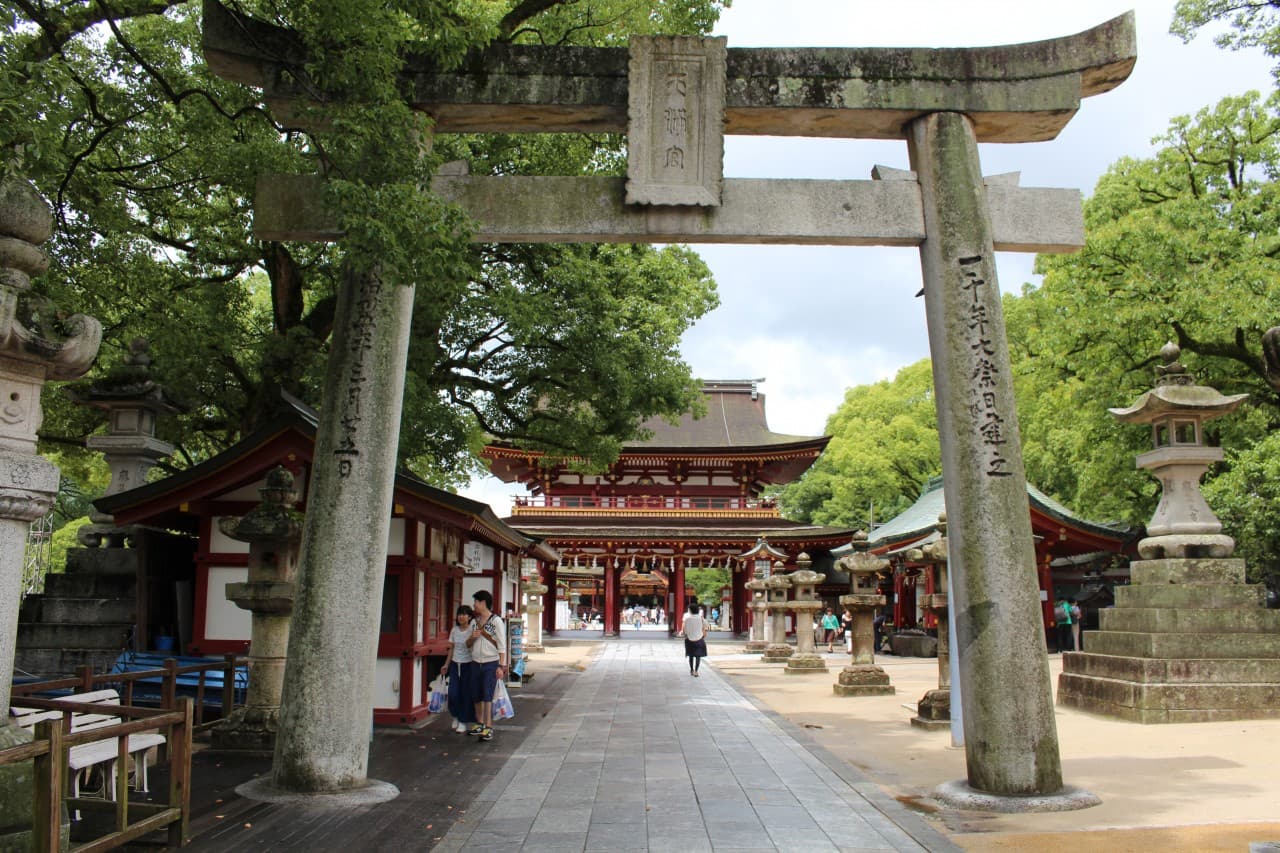
Dazaifu Tenmangu Shrine is one of Japan's most important Tenmangu shrines, alongside Kyoto's Kitano Tenmangu. It is dedicated to Sugawara no Michizane, a Heian period scholar and politician, revered as the deity of learning, culture, and the arts. The shrine is built over his tomb, making it a site of profound historical and spiritual significance, particularly for students and academics.
Visitors frequently highlight the shrine's expansive and beautifully maintained grounds, which offer a serene escape despite the crowds. The approach to the shrine, known as Omote-Sando, is consistently praised for its lively atmosphere, lined with numerous shops and restaurants. Here, the local specialty, umegae mochi (plum blossom rice cake), is a must-try, with many reviewers recommending sampling it fresh. Another frequently mentioned highlight is the architecturally striking Starbucks, designed by Kengo Kuma, which blends traditional Japanese design with modern aesthetics and is a popular photo spot. Many also enjoy rubbing the bronze ox statues, believed to impart wisdom and academic blessings.
To make the most of your visit, plan to spend around 2-3 hours exploring the shrine and its surrounding shops. Arriving earlier in the morning or later in the afternoon can help avoid the peak crowds, especially on weekends and during exam seasons when the shrine is particularly busy with students. While the main hall may be undergoing renovation (as noted by several reviewers), the temporary hall and the overall grounds still offer a rich experience. Don't forget to explore the quieter back areas and side trails, which many visitors find to be peaceful and less crowded, offering additional smaller shrines and beautiful natural scenery. Consider renting a kimono near the station for an enhanced cultural experience and photo opportunities.
Getting to Dazaifu Tenmangu is straightforward. From Fukuoka, you can take the Nishitetsu Railway from Tenjin Station directly to Dazaifu Station, which is highly recommended by reviewers for its convenience. Alternatively, a direct bus service, the Nishitetsu Bus "Tabito," runs from Hakata Station. The shrine is just a 5-minute walk from Dazaifu Station along the bustling Omote-Sando. For those driving, paid parking lots are available in the alleys near the shrine, though public transport is often preferred due to potential traffic and crowds.
A common complaint among visitors is the significant crowd, especially on weekends, holidays, and during exam periods, which can detract from the solemn atmosphere. To mitigate this, visiting on a weekday or during off-peak hours is advisable. Some visitors also express disappointment if the main hall is under renovation, as it alters the traditional viewing experience. However, the temporary structures are often noted for their unique design and the opportunity for a closer encounter with the shrine's essence. Be aware that the approach road can feel very commercialized, but many find this part of the charm, offering opportunities for souvenirs and local snacks.